Author name: admin

Seminar

EHEPA Seminar 34

EHEPA SEMINAR 34 Title Behavioral Sciences Hijacked: How it's abused and misused in the commercial determinants of health. Organizer Ethiopian Health Education and Promotion Professionals Association (EHEPA) Brief biography of the presenter Wallelign Alemnew Assistant Professor of Health Education & Promotion University of Gondar Date & Time Friday Oct 31, 2025 ⋅ 11am – 12pm (East Africa Time) Modality Virtual Meeting link https://meet.google.com/hco-bkki-jjq?hs=224 Description of the Presentation This presentation summarizes findings from a systematic review examining the effectsof community-based health education interventions on health literacy amongadults. Itexplores how various community-driven programs, including peer education,participatory workshops, and multimedia campaigns, influence individuals’ability to access, understand, and apply health information. Download

Seminar

EHEPA Seminar 33

EHEPA SEMINAR 33 Title Behavioral Sciences Hijacked: How it's abused and misused in the commercial determinants of health. Organizer Ethiopian Health Education and Promotion Professionals Association (EHEPA) Brief biography of the presenter Eshetu Girma (PhD) Research Scientist, African Population and Health Research Center (APHRC) Date & Time Tuesday, September 30 · 11:00am – 12:00pm Modality Virtual Meeting link https://meet.google.com/iuc-twgn-pvo Description of the Presentation The burden of noncommunicable diseases (NCDs) and mental health conditions is rising rapidly in low- and middle-income countries such as Ethiopia, largely driven by the influence of commercial determinants of health. This seminar will explore what commercial determinants of health are and their consequences for NCDs and mental health. We will examine how behavioral and structural strategies—including colonial legacies—are misused and abused to promote unhealthy products and services. Finally, the session will discuss ways to counter these industry tactics through behavioral science perspectives and approaches. Download

Project current

Evaluating the Effectiveness of Community Public Health Emergency Management (C-PHEM) Training in Ethiopia

A Mixed-Methods Study 🎯 General Objective To evaluate the effectiveness of community PHEM trainings among Health Extension Workers (HEWs) and Community Volunteers (CVs) in Ethiopia, focusing on knowledge and skill acquisition, and identifying implementation gaps. 📌 Specific Objectives • Measure changes in participants’ knowledge of core PHEM competencies immediately post-training • Assess skill gains and practical application of training content • Evaluate training delivery methods to inform adaptive improvements • Provide evidence-based recommendations for scalable, sustainable community-level emergency preparedness programs 🧪 Methodology This nationwide study uses a mixed-methods design guided by WHO’s Five-Level Training Evaluation Framework: Quantitative data (n=844) will be collected via pre/post surveys and observational checklists. Qualitative insights will be gathered through 28 in-depth interviews and 15 key informant interviews with trainees, supervisors, and coordinators. 🌍 Significance This study supports Ethiopia’s National Health Extension Program and the “One Health” strategy by strengthening frontline emergency response capacity. Findings will inform future training design, enhance community resilience, and contribute to national and global health security. Key Expected Outcomes ✅ Significant improvement in trainees’ knowledge and emergency response skills ✅ Evidence of behavior change in community-level preparedness and coordination ✅ Actionable feedback for refining training content and delivery ✅ Strategic alignment with Ethiopia’s Health Extension Program and “One Health” strategy ✅ Foundation for scaling and institutionalizing community PHEM training nationally 🤝 Partners Led by EHEPA in collaboration with UNICEF Ethiopia and the Ethiopian Public Health Institute (EPHI), this study is part of the Ethio-Pandemic Multi-Sectoral Prevention, Preparedness, and Response (EPPR) Project, funded by the Pandemic Fund.For more information, partnership inquiries, or access to study findings (in the future):

Project current

Behavioral and Social Drivers of HPV Uptake among Out-of-School Adolescent Girls in Selected Regions of Ethiopia

Project Overview Cervical cancer, primarily caused by Human Papillomavirus (HPV), remains one of the most deadly cancers affecting women in Ethiopia. Despite the introduction of the HPV vaccine in 2018 for girls, uptake remains critically low, especially among out-of-school adolescent girls in underserved populations. To address this gap, this project investigates the behavioral and social factors influencing the uptake of the Human Papillomavirus (HPV) vaccine among out-of-school adolescent girls aged 9–14 in Ethiopia’s Afar, Somali, Gambella, and Benishangul-Gumuz regions. Led by EHEPA in collaboration with UNICEF Ethiopia, this study aims to generate actionable insights to improve vaccine demand, delivery, and equity. Objectives  To determine the prevalence of HPV vaccine uptake among out-of-school adolescent girls aged 9–14 years.  To examine levels of confidence in HPV vaccine safety and benefits among parents/caregivers.  To identify behavioral and social drivers (motivation, risk perception, trusted sources, decision-making autonomy) influencing HPV vaccine uptake.  To explore structural and service delivery factors (availability, consent procedures, documentation, access points) affecting HPV vaccination  To analyze factors significantly associated with HPV vaccine uptake and parental confidence Conceptual Framework The study is guided by the WHO & UNICEF Behavioral and Social Drivers (BeSD) of Vaccination Framework, which examines:  Thinking & Feeling: Awareness of HPV and HPV vaccine, perceived disease risk, vaccine confidence, including perceived benefit, safety, and trust.  Social norms/processes: Influence of family, peer, religious leaders, teachers, health workers’ recommendations, and gender norms  Motivation: Intention to receive recommended vaccines (girls) and Intention to vaccinate (parents/caregivers) and decision-making autonomy.  Practical Issues: Availability, affordability, ease of access, satisfaction, service quality, and respectful treatment by health workers. Regions Covered: Afar, Somali, Gambella, Benishangul-Gumuz These dimensions collectively shape vaccine uptake and inform targeted strategies to improve demand and delivery. Study Outcomes:  Quantitative data have been conducted using KOBO tool box from June to August, 2025.  The data were carefully imported, cleaned, and checked for completeness and accuracy and analyzed using STATA version 17.  The key findings have been documented and presented using clear narration, tables and graphs.  A virtual seminar has been delivered by the project officer and co-investigator addressing the key findings of this study during the 37th seminar organized by EHEPA https://ehepa.org/seminar  Based on the finalized report, two manuscript has been prepared to publish the study findings. Funding & Collaboration This project is generously funded by UNICEF Ethiopia and ethically approved by the Ethiopian Public Health Association (EPHA) Institutional Review Board. It reflects EHEPA’s commitment to advancing Adolescent Sexual and Reproductive Health, equity, and evidence-based public health promotion through evidence generation. Data Collector Training From July 14-15,2025 During data collection in all regions

Seminar

EHEPA SEMINAR 32​

EHEPA SEMINAR 32 Title Fighting Health Misinformation in Ethiopia: Myths, Media, and Mobilizing the Public Organizer Ethiopian Health Education and Promotion Professionals Association (EHEPA) Brief biography of the presenter Dr. Trhas Tadesse Associate Professor of Public Health Date & Time Thursday, August 28 · 11:00am – 12:00pm Modality Virtual Meeting link https://meet.google.com/efs-dbwr-eru Description of the Presentation Health misinformation undermines public trust, fuels harmful practices, and hampers effective healthcare in Ethiopia. This presentation explores common health myths, the role of traditional and digital media in shaping public perceptions, and the societal impact of misinformation. Practical strategies for mobilizing communities, strengthening media literacy, and promoting evidence-based health communication will be shared. Download

News

✨ Highlights from Our 2nd General Assembly! ✨

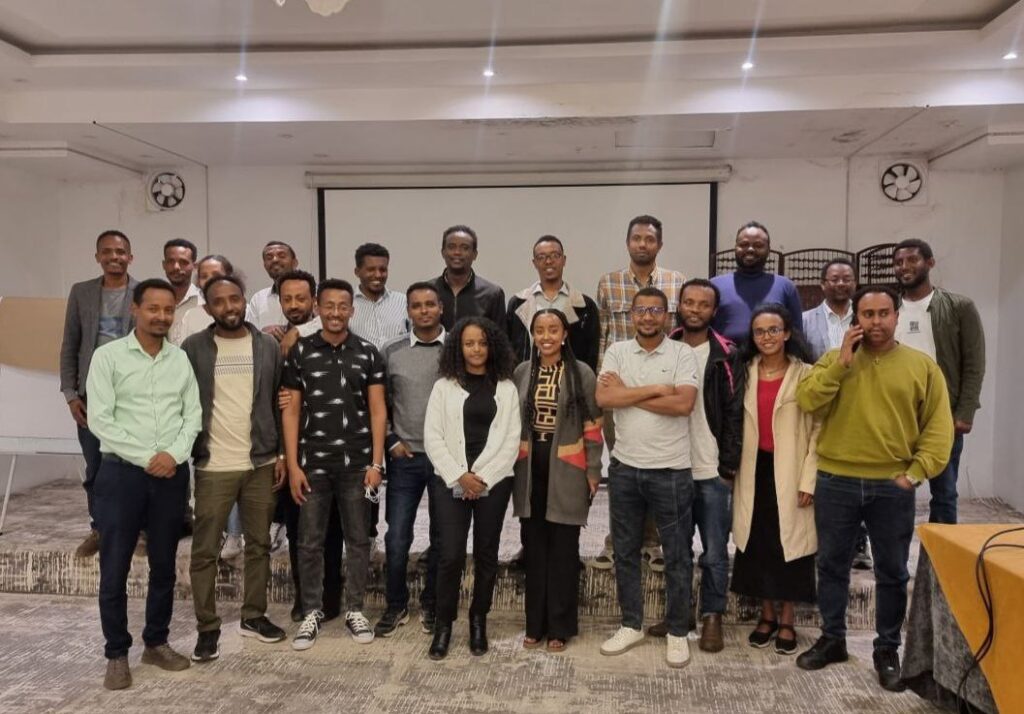
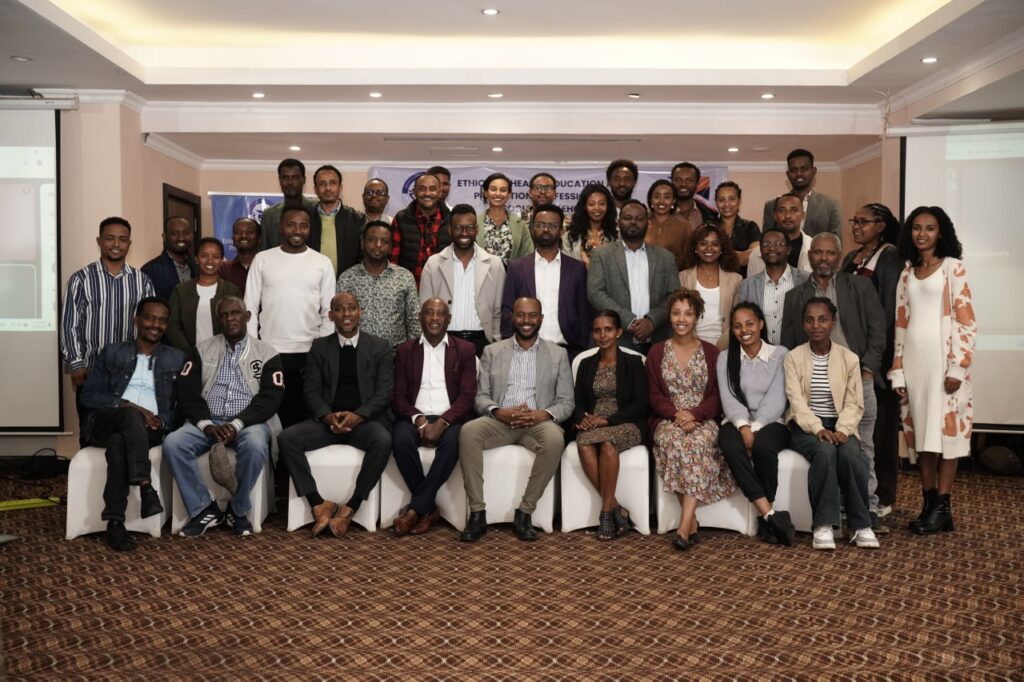
✨ Highlights from Our 2nd General Assembly! ✨ we gathered for our Second General Assembly Meeting , a powerful moment to reflect on our journey and envision our future 🌍 The event brought together EHEPA members, Public health professionals, and partners from across the sector to celebrate progress, share insights, and align on our strategic vision for the future. 🙏 A huge thank you to everyone who attended and support our mission of advancing health promotion and education in Ethiopia. Let’s keep the momentum going! 🚀 🎥 Special thanks to Zeleman Communications for beautifully capturing the event through photos and video. 📸 Here are a few memorable moments from the event! 👇 👇

News, Uncategorized

The Second General Assembly Meeting of EHEPA!

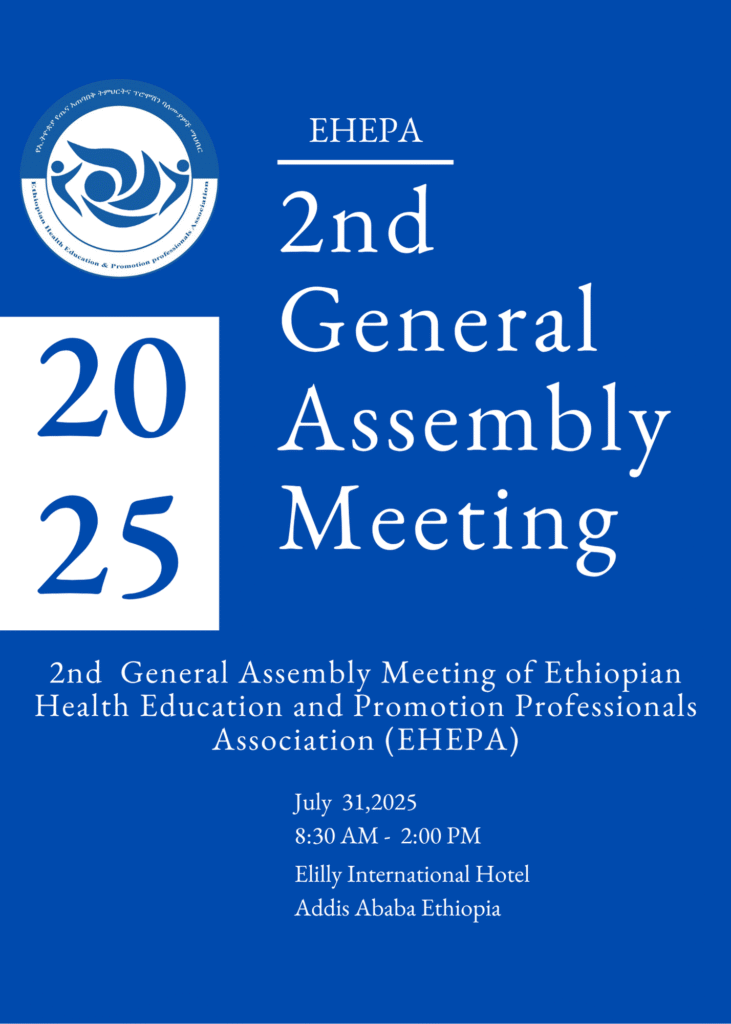
Second General Assembly Meeting of EHEPA We are thrilled to announce our members at the upcoming Second General Assembly Meeting of EHEPA! Mark your calendars for this important event, which will be held on July 31st, 2025, at Elilly International Hotel Addis Ababa Ethiopia. We encourage all members to attend and make your presence felt. Don’t miss out on this exciting opportunity to connect with fellow members, exchange ideas, and contribute to the growth of our association! Register Here [forminator_form id=”4554″] Please Note As much as we would love to support all our members, due to limited funding, we regret to inform you that we are currently unable to cover transport and accommodation costs for members traveling from regions outside Addis Ababa. We truly appreciate your understanding and continued commitment to our shared mission.

Vacancy

Consultant for Electronic study tool (ODK)…….Closed

Consultant for Electronic study tool (ODK) Organization: Ethiopian Health Education and Promotion Professional Association (EHEPA) Position: Consultant for Electronic study tool (ODK) Employment type: Contract Deadline: June 20, 2025 Duration of task: 02 weeks Required Number: One Job Description The Ethiopian Health Education and Promotion Professional Association (EHEPA) was established and registered by the Ethiopian Civil Society Organization Authority in December 2021. The association’s mission is to save lives and improve the quality of life for Ethiopian citizens by promoting healthy behaviors, preventing diseases, and encouraging treatment-seeking and adherence to services aimed at both communicable and non-communicable diseases, as well as maternal and child health. The organization conducts both quantitative and qualitative research related to behavioral health, synthesizes evidence, and monitors and evaluates health behavior programs. EHEPA, in collaboration with UNICEF Ethiopia, is currently conducting an assessment aimed at understanding the behavioral and social factors influencing the uptake of the HPV vaccine among out-of-school adolescent girls in four specific regions of Ethiopia. This research project seeks to gather valuable insights that can guide future health initiatives and improve HPV vaccination rates. To support this project work, EHEPA is seeking qualified data collectors who possess the necessary qualifications and relevant experience. Job Summary The consultant under the guidance of project team will: 1. Develop ODK templates for questionnaires in both Amharic and English version, following the study protocol. 2. Ensure the forms are user-friendly, logically structured, and free of errors. 3. Install and configure ODK Collect on Android devices. 4. Troubleshoot issues related to GPS accuracy, media uploads, and offline data collection. 5. Monitor real-time data submissions for any inconsistencies. 6. Export data to statistical software such as SPSS, Stata, or R. 7. Ensure the confidentiality of the data. Job requirements • Bachelors or Master’s degree in Computer Science, Data Science, IT, Health informatics, Public Health, or related fields. • A minimum of two years of hands-on experience with working on electronic study tools and data management • Prior working experience in research. Required Skills • Excellent interpersonal and team work skill. • The ability to multi-task, meet deadlines within tight timeframes, and work independently How to Apply Interested and qualified candidates are invited to apply through email address at ehepaehepa@gmail.com within ten working days of this announcement. Female applicants are highly encouraged. An applicant is requested to attach the following documents: • Letter of application mentioning the specific study site • CV • Copies of degrees, and other relevant documents EHEPA has a zero tolerance policy with regard to Sexual Exploitation and Abuse by EHEPA‘s personnel against the people they serve. All forms of sexual exploitation and abuse are incompatible with the universally accepted norms, values, principles and standards that underpin our organization. Protection from Sexual Exploitation and Abuse (PSEA) is the responsibility of everyone and all selected candidates will be required to comply with the EHEPA’s PSEA Policy at all times. All selected candidates must ensure that they understand and act in accordance with this clause.

Vacancy

Vacancy Announcement For Field Supervisor……..Closed

Vacancy Announcement for Field Supervisor Organization: Ethiopian Health Education and Promotion Professional Association (EHEPA) Position: Field Supervisor Workplace: Somali, Afar, Benishangul-Gumuz and Gambela Employment type: Contract Deadline: June 20, 2025 Duration of task: 02 weeks Required Number: Four field supervisors (one field supervisor per region) Job Description The Ethiopian Health Education and Promotion Professional Association (EHEPA) was established and registered by the Ethiopian Civil Society Organization Authority in December 2021. The association’s mission is to save lives and improve the quality of life for Ethiopian citizens by promoting healthy behaviors, preventing diseases, and encouraging treatment-seeking and adherence to services aimed at both communicable and non-communicable diseases, as well as maternal and child health. The organization conducts both quantitative and qualitative research related to behavioral health, synthesizes evidence, and monitors and evaluates health behavior programs. EHEPA, in collaboration with UNICEF Ethiopia, is currently conducting an assessment aimed at understanding the behavioral and social factors influencing the uptake of the HPV vaccine among out-of-school adolescent girls in four specific regions of Ethiopia. This research project seeks to gather valuable insights that can guide future health initiatives and improve HPV vaccination rates. To support this project work, EHEPA is seeking qualified data collectors who possess the necessary qualifications and relevant experience. Job summary The field supervisors under the guidance of the project team will: 1. Arrange for the required endorsement letters from the regions 2. Identify and prepare participants for the interview 3. Generate daily reports summarizing team progress and data quality 4. Oversee and manage data collectors, promoting a positive and efficient work environment 5. Provide guidance and support to data collectors during the data collection activity 6. Conduct regular reviews and give constructive feedback to the team 7. Facilitate daily debriefing sessions with data collectors 8. Track the daily progress of the team to ensure tasks are completed on time 9. Create daily reports that summarize team progress and data quality Job requirements • A Bachelor’s or Master’s degree in Public Health or a related health discipline. • A minimum of two years of experience in field supervision within health-related projects. • Familiarity with electronic data collection systems and online databases, including Open Data Kit (ODK). • Ability to communicate effectively in the local languages of the study areas, specifically Somali, Afar, Benishangul-Gumuz, and Gambela regions. Required Skills • Good leadership and team management skills • Excellent communication and interpersonal skills • Strong attention to detail and organizational skills • Time management & decision-making skills Duty station/location The selected candidate will be assigned to one of the four regions. Applicants are required to indicate their preferred region in their application letter based on the language requirement. How to Apply Interested and qualified candidates are invited to apply through email address at ehepaehepa@gmail.com within ten working days of this announcement. Female applicants are highly encouraged. An applicant is requested to attach the following documents: • Letter of application mentioning the specific study site • CV • Copies of degrees, and other relevant documents EHEPA has a zero tolerance policy with regard to Sexual Exploitation and Abuse by EHEPA‘s personnel against the people they serve. All forms of sexual exploitation and abuse are incompatible with the universally accepted norms, values, principles and standards that underpin our organization. Protection from Sexual Exploitation and Abuse (PSEA) is the responsibility of everyone and all selected candidates will be required to comply with the EHEPA’s PSEA Policy at all times. All selected candidates must ensure that they understand and act in accordance with this clause.

Scroll to Top