Author name: admin

News

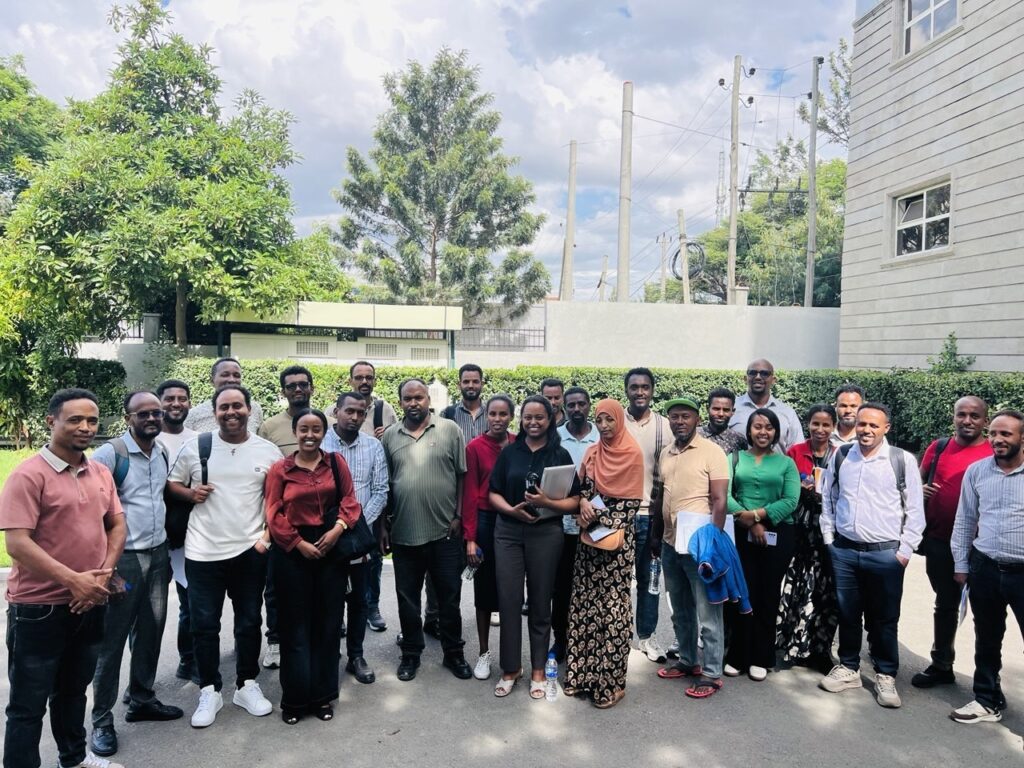
Data collectors training under the C-PHEM national training assessment

From April 20-24 2026, our team delivered two rounds of training to data collectors as part of our upcoming study under the C-PHEM national training program for community health workers This initiative is being implemented in collaboration with the Ethiopian Public Health Institute and UNICEF Ethiopia, reflecting a shared commitment to strengthening community health systems through evidence-based approaches. 👏 We appreciate the research team and participants for their dedication and look forward to generating valuable insights to support community public health emergency management initiatives.

Seminar

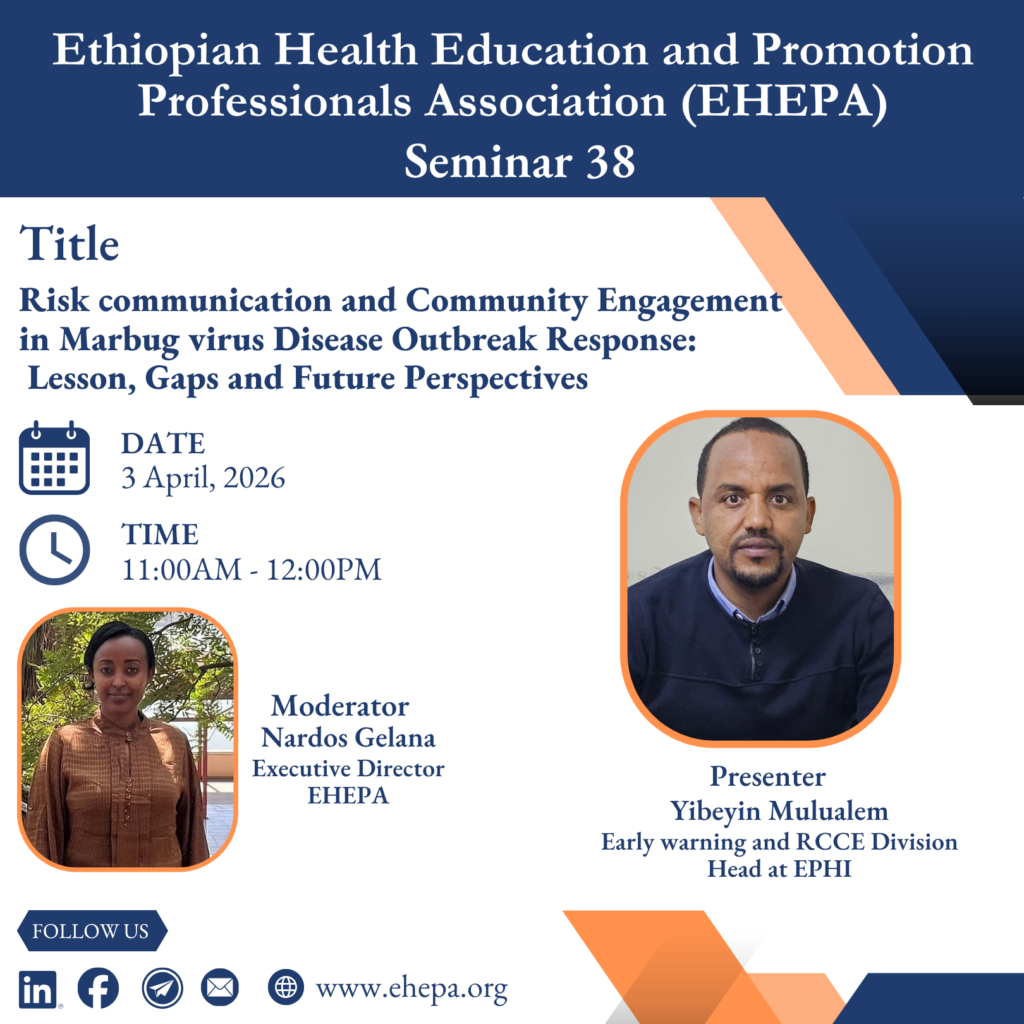
EHEPA Seminar 38

EHEPA SEMINAR 38 Title Risk communication and Community Engagement in Marbug virus Disease Outbreak Response: Lesson, Gaps and Future Perspectives Organizer Ethiopian Health Education and Promotion Professionals Association (EHEPA) Brief biography of the presenter Yibeyin Mulualem is a public health professional with expertise in risk communication and community engagement, public health surveillance, and outbreak response. He has experience working in public health emergencies including infectious disease outbreaks, where he contributes strengthen community-based interventions and improving communication strategies. His work focus on bridging technical public health efforts with community needs, promoting trust, and enhancing the effectiveness of emergency response. He is now working as early warning and RCCE division head in Ethiopian public health institute, under the ministry of health. Date & Time Friday April 03, 2026 ⋅ 11am – 12pm (East Africa Time) Modality Virtual Meeting link Description of the Presentation As we all know, Ethiopia reported its first ever Marburg virus diseases/MVD/ in November 2025. Following the confirmation of the outbreak, the institute activated the Incident Management System (IMS) to ensure a coordinated and effective outbreak response. Risk communication and community engagement is one of the critical pillars that connect technical interventions with the people they are meant to protect and serve. In this seminar, we will highlight the RCCE lesson learned, gaps identified and future perspectives in RCCE interventions. These insights aim to strengthen understanding, improve response strategies, and enhance preparedness for the future pandemics. Download

Project current

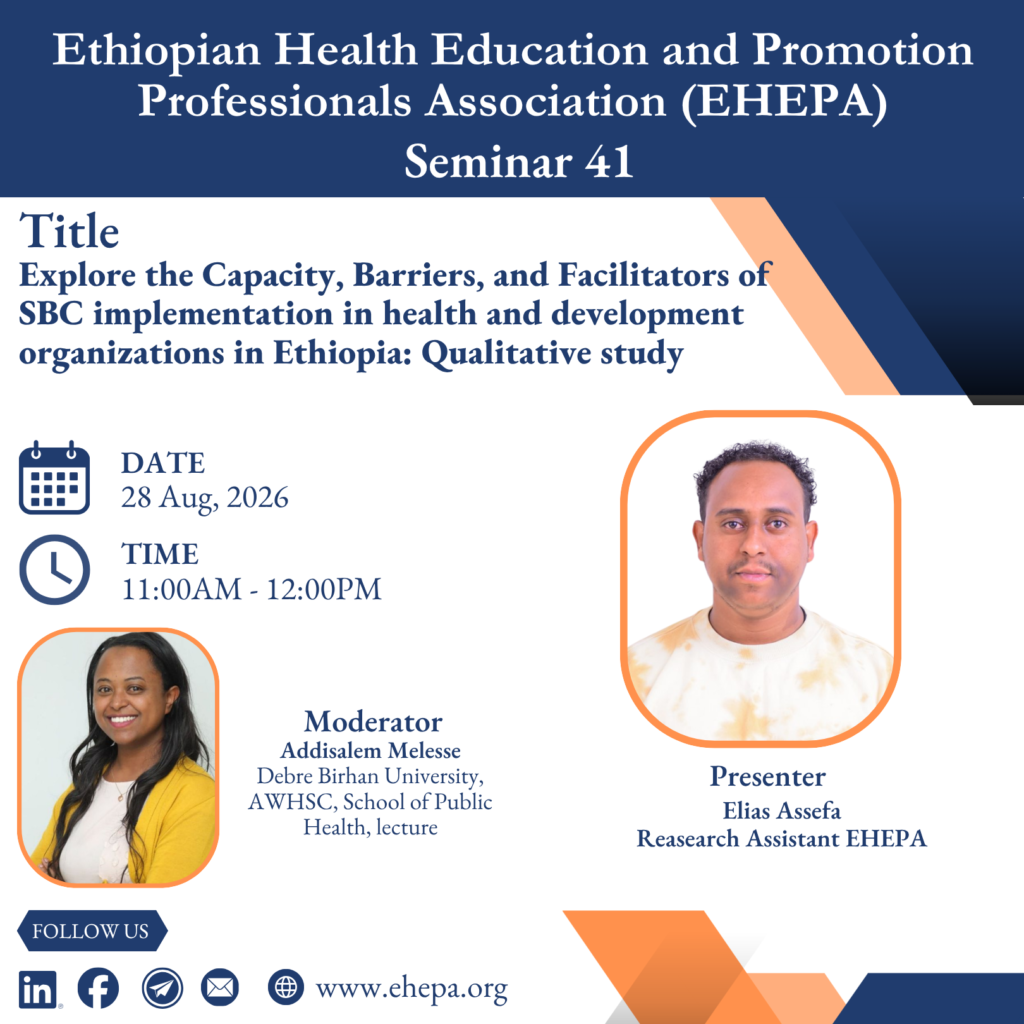
Exploring Capacity, Barriers, and Facilitators to Social and Behavior Change (SBC) Implementation in Selected Organizations in Ethiopia: A Qualitative Study

Project Overview Social and Behavior Change (SBC) is a cornerstone of effective public health programming. Yet, its implementation across institutions often faces challenges related to capacity, coordination, and contextual relevance. This qualitative study, led by EHEPA, aimed to explore the institutional capacity, barriers, and facilitators influencing the Designing, Implementation, and Monitoring and Evaluation of SBC interventions within selected organizations working on SBC in Ethiopia. By engaging key stakeholders, program managers, and frontline implementers from different sectors, the study has generated actionable insights that can strengthen SBC systems and inform future programming and policy. Study Objectives This study aimed to:  To explore the existing organizational capacity for planning, implementing, and monitoring/evaluation of SBC interventions in selected organizations in Ethiopia.  To explore barriers (structural, operational, and contextual) that hinder effective SBC programming in selected organizations in Ethiopia  To identify facilitators and promising practices that contribute to successful SBC intervention. Methodology & Framework This is a qualitative study used in-depth interviews (IDIs) and key informant interviews (KIIs) with SBC practitioners and decision-makers. The study is guided by global SBC systems strengthening frameworks, notably the UNICEF-WHO SBC Indicator Framework, and draw on principles from implementation science to ensure contextual relevance and practical utility. Participants include: • SBC focal persons and technical advisors • Communication and advocacy specialists • Program managers and coordinators • Monitoring and evaluation officers • Senior representatives from government agencies, NGOs, community-based, faith-based, and development partner organizations engaged in health promotion and SBC programming. Main activities performed:  A tool validation workshop was conducted with the participation of diverse stakeholders and partners representing multiple sectors to ensure the relevance and appropriateness of the data collection tools (IDI/KII topic guides and organizational SBC Assessment checklist).  Data collection process has been conducted from November to December 2025, and IDI and KII data were conducted and thematically analyzed.  Alongside, the SBC capacity assessment checklist has been completed, thoroughly reviewed, cleaned, and analyzed to ensure data accuracy and relevance.  Report of the main findings has been produced and documented under clear thematic areas (i.e., Organizational Roles and Capacity, SBC Designing/Planning, SBC Implementation, SBC intervention Mentoring/Evaluation, SBC sustainability, and Participants’ Recommendations). ,  Findings from the qualitative data checklist and the SBC capacity assessment checklist have been triangulated. Outcomes of the study: After this study, the following are generated:  A comprehensive SBC capacity assessment report highlighting the existing SBC organizational capacity and facilitators/barriers of SBC interventions in Ethiopia  Evidence was generated on the existing capacity for planning, implementing, and monitoring SBC interventions within health and development organizations  Key barriers that hinder effective SBC programming across these organizations were identified. The best practices and facilitating factors that contribute to successful SBC implementation were explored. Future Plan:  Validating the findings and preparing a stakeholders-driven solutions co-designed through a participatory consultative workshop based on the main findings of the study.  An implementation roadmap (action plan) informed by validated findings and behavioral science insights.  A virtual seminar will be organized and delivered by EHEPA to present the key findings of this study.  Writing manuscript(s) based on the final report to disseminate the study findings through publication on peer reviewed reputable journal(s).  Preparation and provision of policy brief and institutional recommendations to support SBC integration and scale-up.  Strengthened collaboration with SBC networks, including AS-SBC and UNICEF Ethiopia. Tool validation workshop (November 25, 2025): Qualitative data collection training (November 27-28, 2025) Why This Matters? This study supports EHEPA’s mission to advance evidence-based health education and promotion in Ethiopia. By identifying practical solutions and systemic gaps, the findings will contribute to more effective, scalable, and sustainable SBC interventions, ultimately improving health outcomes and community engagement. Funding & Collaboration This project is generously funded by UNICEF Ethiopia and ethically approved by the Ethiopian Public Health Association (EPHA) Institutional Review Board. It reflects EHEPA’s commitment to advancing SBC through evidence-generation and knowledge transfer. Contact & Follow-Up For more information or to engage with the study: 📞Mobile (EHEPA): +251 907 555 599 📧 Email: info@ehepa.org 🌐 Website: https://ehepa.org

Seminar

EHEPA Seminar 37

EHEPA SEMINAR 37 Title Behavioral, Social, and Structural Drivers of HPV Vaccine Uptake and Parental Confidence Among Out-of-School Adolescent Girls in Ethiopia Subtitle: Findings from Afar, Benishangul-Gumuz, Gambella, and Somali Regions Organizer Ethiopian Health Education and Promotion Professionals Association (EHEPA) Brief biography of the presenter Assistant Professor of Health Education and Promotion, Project Officer EHEPA Date & Time Friday March 06, 2026 ⋅ 11am – 12pm (East Africa Time) Modality Virtual Meeting link Description of the Presentation This seminar will present findings from a community-based study assessing HPV vaccine uptake and parental confidence among out-of-school adolescent girls in underserved regions of Ethiopia. The study applies the WHO Behavioral and Social Drivers (BeSD) framework to explore awareness, motivation, social norms, and structural barriers to vaccination. Results highlight low uptake (30.4%), limited awareness of cervical cancer and HPV, and the critical role of parental confidence and health worker recommendations. The presentation will discuss key predictors of uptake, barriers to equitable access, and actionable recommendations for community-based outreach and health system strengthening. Download

Seminar

EHEPA Seminar 36

EHEPA SEMINAR 36 Title Reimagining Urban Slum Immunization Services: A Human-Centered Approach to Reaching Underserved Children Organizer Ethiopian Health Education and Promotion Professionals Association (EHEPA) Brief biography of the presenter Finina Abebe (Immunization Officer at CHAI Ethiopia) Date & Time Friday Jan 30, 2026 ⋅ 11am – 12pm (East Africa Time) Modality Virtual Meeting link https://meet.google.com/yrg-ckcr-sug?hs=224 Description of the Presentation this presentation discusses an intervention implemented in Addis Ababa, Nifas Silk-Lafto Sub-City, Woreda 14. The intervention was co-designed with end users using a Human-Centered Design (HCD) approach to address immunization gaps among underserved children in urban slum settings. The session highlights the design process, implementation experience, and key learnings from engaging communities and frontline workers to improve service delivery. Download

Seminar

EHEPA SEMINAR 35

EHEPA SEMINAR 35 Title Human-Centered Design in Action for Immunization Demand Promotion: Lessons from Ethiopia Organizer Ethiopian Health Education and Promotion Professionals Association (EHEPA) Brief biography of the presenter Dr. Adugna Endale (Tailored Immunization SBCStrategies National Consultant, UNICEF Ethiopia) Date & Time Wednesday Dec 31, 2025 ⋅ 11am – 12pm (East Africa Time) Modality Virtual Meeting link Wednesday Dec 31, 2025 ⋅ 11am – 12pm (East Africa Time) Description of the Presentation This seminar will explore Ethiopia’s experiencein applying HCD approach to strengthen immunization demand promotion. It willpresent practical HCD applications implemented across diverse contexts, with aparticular focus on documented achievements in addressing demand-relatedbarriers to vaccination. The session will also discuss key implementationchallenges, synthesize lessons learned, and explore future prospects forinstitutionalizing HCD approaches within immunization and other public healthprograms. Download

Vacancy

Consultant for Electronic study tool (ODK)………Closed

Organization: Ethiopian Health Education and Promotion Professional Association (EHEPA) Position: Consultant for Electronic study tool (ODK)Employment type: ContractDeadline: December 24, 2025Duration of task: 03 weeksRequired Number: One About EHEPA The Ethiopian Health Education and Promotion Professional Association (EHEPA) was established and registered by the Ethiopian Civil Society Organization Authority in December 2021. Its mission is to save lives and improve the quality of life for Ethiopian citizens by promoting healthy behaviors, preventing diseases, and encouraging treatment-seeking and adherence to services EHEPA works across communicable and non-communicable diseases, maternal and child health, and behavioral health. The organization conducts both quantitative and qualitative research, synthesizes evidence, and monitors and evaluates health behavior programs to generate actionable insights for public health initiatives. Job Description EHEPA, in collaboration with UNICEF Ethiopia, is conducting a study to evaluate the effectiveness of Community Public Health Emergency Management (c-PHEM) training in Ethiopia using a mixed-methods approach. This study aims to generate evidence on how c-PHEM training contributes to strengthening public health emergency preparedness and response at the community level. To support this project, EHEPA is seeking a qualified consultant to design and prepare electronic data collection tools using Open Data Kit (ODK). The consultant will ensure that the tools are user-friendly, technically sound, and aligned with the study protocol, thereby facilitating accurate and efficient data collection across study sites. Scope of Work Under the guidance of the project team, the consultant will: 1. Develop ODK templates for questionnaires and checklists in both local languages (Afan Oromo, Afarigna, Amharic, Somali, and Tigrigna) and English, aligned with the study protocol. 2. Ensure usability and accuracy of forms (user-friendly, logically structured, and error-free). 3. Install and configure ODK Collect on Android devices or Tablets. 4. Troubleshoot technical issues related to GPS accuracy, media uploads, and offline data collection. 5. Monitor real-time submissions and identify inconsistencies. 6. Export datasets to statistical software (SPSS, Stata, or R) as required. 7. Maintain strict confidentiality of all collected data. Job requirements Qualifications and Requirements • Bachelor’s or Master’s degree in Computer Science, Data Science, IT, Health Informatics, Public Health, or related fields. • Minimum of two years of hands-on experience with electronic study tools and data management. • Prior experience in research projects. Required Skills • Strong interpersonal and teamwork skills. • Ability to multi-task, meet tight deadlines, and work independently. Application Process Interested and qualified candidates are invited to apply within Five working days of this announcement by sending applications to: ehepaehepa@gmail.com. Applications must include: • A letter of application mentioning the specific study site. • An updated CV. • Copies of degrees and other relevant documents. Female applicants are strongly encouraged to apply. EHEPA has a zero tolerance policy with regard to Sexual Exploitation and Abuse by EHEPA‘s personnel against the people they serve. All forms of sexual exploitation and abuse are incompatible with the universally accepted norms, values, principles and standards that underpin our organization. Protection from Sexual Exploitation and Abuse (PSEA) is the responsibility of everyone and all selected candidates will be required to comply with the EHEPA’s PSEA Policy at all times. All selected candidates must ensure that they understand and act in accordance with this clause.

Vacancy

Call for Application – Qualitative & Quantitative Data Collector……. Closed

Organization: Ethiopian Health Education and Promotion Professional Association (EHEPA)Position: Qualitative & Quantitative Data CollectorWorkplace: All regions (Addis Ababa, Afar, Amhara, Benishangul Gumuz, Central Ethiopia, , Gambela, Diredawa and Harari, Oromia, Sidama, South Ethiopia, Southwest Ethiopia, Somali and Tigray)Employment Type: ContractDeadline: December 21, 2025Duration of task: One monthRequired number: 26 (2 per region) Job Description The Ethiopian Health Education and Promotion Professional Association (EHEPA) is a legally registered Civil Society Organization established in December 2021. The association’s mission is to save lives and improve the quality of life for Ethiopian citizens by promoting healthy behaviors, preventing diseases, and encouraging treatment-seeking and adherence to services aimed at both communicable and non-communicable diseases, as well as maternal and child health. The organization conducts both quantitative and qualitative research related to behavioral health, synthesizes evidence, and monitors and evaluates health behavior programs. EHEPA, in collaboration with UNICEF Ethiopia and EPHI, is currently conducting assessment study aimed to evaluate the Effectiveness of Community Public Health Emergency Management (c-PHEM) Training in Ethiopia using a mixed methods approach. The c-PHEM Training is planned to be conducted by Ethiopian Public Health Institute (EPHI) and intended for Community Health Workers (CHWs). This study aims to evaluate community PHEM training among CHWs and generate insights to strengthen future training initiatives across Ethiopia. To support this study project work, EHEPA is seeking qualified quantitative and qualitative data collectors who possess the necessary qualifications and relevant experience. Key Responsibilities The key responsibilities of Data collectors for Quantitative data will include: 1. Participate in data collection-training workshop. 2. Administer structured questionnaires and surveys to health extension workers, trainers, and coordinators during and after training sessions. 3. Collect the interviewer administered questionnaire data from participants and enter/send data using the ODK software platforms. 4. Perform data entry by transferring responses from paper-based, self-administered questionnaires into the ODK. 5. Ensure informed consent is obtained from each participant before data collection. 6. Check completed questionnaires for completeness, consistency, and accuracy on daily basis. 7. Submit clean, encrypted data files to the server on a daily basis. 8. Maintain absolute confidentiality and security of all data collected. 9. Adhere to all ethical standards and project guidelines throughout the assignment. 10. Demonstrate flexibility and willingness to take on additional responsibilities as needed to support the success of the study. The key responsibilities of Data collectors for Qualitative data will include: 1. Conduct in-depth interviews (IDIs) and Key Informant Interviews (KIIs) with HEWs, coordinators, and supervisors using semi-structured guides during training and three (3) months after training. 2. Fill out the daily observation checklist for each training sessions. 3. Audio-record interviews after obtain consent from participants, ensuring technical quality. 4. Take detailed, high-quality notes during all qualitative data collection time. 5. Take daily field notes summarizing key themes, observations, and non-verbal cues. 6. Ensure that all collected data is complete, high quality, and handled with strict confidentiality. 7. Produce verbatim transcription from the voice recordings and translate it from local language to English with precision and clarity and submit the translated documents on time. 8. Adhere to all ethical standards and project guidelines throughout the assignment. 9. Collaborate closely with the EHEPA project team to ensure smooth and successful data collection. 10. Provide daily progress updates and promptly report any challenges encountered in the field. 11. Demonstrate flexibility and willingness to take on additional responsibilities as needed to support the success of the study. Job requirements 1. A Bachelor’s or Master’s degree in Public Health or related health sciences discipline. 2. A minimum of 2 years of proven experience in conducting both quantitative (Survey) and qualitative data collection (Key Informant Interviews and In-depth Interviews). 3. Demonstrable experience of digital data collection platforms (ODK). 4. Proficient in conducting observations, interviews, and maintaining field notes. 5. Demonstrable experience in transcription and translation of qualitative data. 6. Familiarity with basic ethical principles in research, including maintaining confidentiality and obtaining informed consent. 7. Willingness to travel to training sites and remote health posts, and available for the initial data collection phase and the follow-up phase after 3 months. 8. Excellent fluency in English and knowing the local language(s) of the assigned duty region is mandatory. 9. Strictly follow research protocols and follow deadlines, accuracy and attention to detail. Required Skills 1. Strong interpersonal skills to engage respondents respectfully. 2. Excellent Interpersonal skills and good team spirit 3. Strong observation, Probing and Note-taking Skills 4. Strong facilitation skills, with the ability to create a trusting environment and probe for deeper insights. 5. Strong organizational & time Management Skills 6. Ability to work independent of frequent supervision 7. Ability to Work collaboratively with the project team. How to Apply Interested and qualified candidates are invited to submit their application via at email address at ehepaehepa@gmail.com within ten (10) working days of this announcement. Female applicants are highly encouraged to apply. An applicant is requested to attach the following documents:• Letter of application• Updated curriculum vitae (CV)• Copies of his/her Academic degrees, and other relevant certificates or documents Duty station/location: Applicants are required to indicate their preferred region in their application letter based on language requirement. The selected candidate will be assigned to their preferred region. Protection from Sexual Exploitation and Abuse (PSEA) Commitment EHEPA maintains a zero-tolerance policy with regard to Sexual Exploitation and Abuse (SEA). by EHEPA‘s personnel against the people they serve. All forms of sexual exploitation and abuse are incompatible with the universally accepted norms, values, principles and standards that underpin our organization. Protection from Sexual Exploitation and Abuse (PSEA) is the responsibility of everyone and all selected candidates will be required to comply with the EHEPA’s PSEA Policy at all times. All selected candidates must ensure that they understand and act in accordance with this clause.

News

የሃዘን መገለጫ

ውድ የሙያ ማህበራችን አባላት የወንድማችን ዶ/ር እሸቱ ግርማ የቀብር ሥነ ሥርዓት የሚፈጸመው በዕለተ ሐሙስ (ህዳር 25/2018 ዓ.ም) ከቀኑ 6:00 ሰዓት ላይ በለቡ ምሥራቀ ፀሐይ ቅዱስ ገብርኤል ቤተ ክርስቲያን (ጀርመን – አርሴማ ቤተክርስቲያን ጎን) እንደሆነ እየገለጽን ለመላ ቤተሠቦቻቸው፣ የስራ ባልደረቦቻቸው፣ ጓደኞቻቸው እና የማህበራችን አባላት መፅናናትን እንመኛለን። እግዚአብሔር ነፍሱን በአፀደ ገነት ያኑርልን።

Vacancy

Vacancy Announcement for Finance and Administrative Assistant Position………..closed

Organizational description The Ethiopian Health Education and Promotion Professional Association (EHEPA) was established and registered by the Ethiopian Civil Society Organization Authority in December 2021. The association’s mission is to save lives and improve the quality of life for Ethiopian citizens by promoting healthy behaviors, preventing diseases, and encouraging treatment-seeking and adherence to services aimed at both communicable and non-communicable diseases, as well as maternal and child health. EHEPA focuses on various areas including behavioral insights, health advocacy, social marketing, community mobilization and engagement, risk communication, and improving health literacy. Additionally, EHEPA develops quality assurance strategies for social and behavior change (SBC) materials and methods. To achieve these objectives, EHEPA is seeking experienced and qualified candidates for the vacant position of Finance and Administrative Assistant. Job Summary The Finance and administrative Assistant will drive the financial and administration processes to conduct the office administration and to generate reliable, transparent & timely financial and administrative information needed by the Association to manage its resources and the funds entrusted to it by its donors & partners, thereby generating ongoing confidence. The finance and administrative assistant will also support to ensure efficient operation of the office.Key Role and Responsibility: under the supervision of the Finance manager, the finance and administrative Assistant responsibilities will be as follows: Assist the head of the field office, in administration and finance matters to ensure an effective management of the financial resources according to the EHEPA procedures. Ensure the compliance of administration, finance and policies and procedures Ensure payables are managed smoothly and efficiently in accordance with EHEPA procedures and with accuracy and completeness. Ensures that all payments are done in a timely manner Ensure that transactions are processed daily in the system and that they are accurate and complete. Administration management Responsible for fixed assets management  Responsible for Human resource management Arrange training material and organize workshops Prepare payment request according to internal procedures of the Association Coordinate and organize field staff travel and EHEPA staff travel in the field Responsible for correspondences, preparation of contracts and sending invitations Handle incoming and outgoing mail, including sorting, distributing, and organizing Maintain office supplies, ensuring availability and proper inventory management Assist in the preparation and coordination of office events Perform general clerical duties, such as photocopying, scanning, and filing Collaborate with other administrative staff to ensure smooth office operations Manage and maintain schedules, appointments, and travel arrangements Assist in the preparation of reports, presentations, and correspondence Maintain and update office records and databases Program audits Provide support role in audits (internal and external) including preparation of documents internal, external and donor audits together with the finance manager Liaise with internal and external auditors on audit related issues Facilitate auditors in performing on-site visits Assist in providing management responses to audit reports and timely implements the recommendations with finance manager Review field budget activities to ensure cost efficiency Ensure all transactions are processed and ready in time for month end and quarter end close as per agreed timetable with finance manager Review payment vouchers, bank & petty cash control sheets Verify travel expense reports Ensure all procurements comply with competitive 3 quotes bidding Issue, track and reconcile approved travel advances to field office staff; review advance reconciliation and claims for completeness and accuracy Manage filing/archiving of all documents and admin files (including invoices, payment vouchers, and expense reports. JOB REQUIREMENT A. Qualification: BA Degree in Accounting & Finance, Human resource management, Business Administration, and social science related fields from recognized higher education institutionB. Relevant Experience: minimum of 2-years’ experience in the area of human resource development and finance.Skills• Advanced skill of the Microsoft office• Excellent English written and verbal communication skills• Excellent organizational and time management skills with the ability to multitask and to work well under pressure as well as prioritize tasks effectively• Strong interpersonal and communication skills, with the ability to work collaboratively in a team environment• Attention to detail, accuracy, and commitment• Ability to work independently and as part of a team• Availability to travel to regionsPersonality• Supportive and ethical in approach• Always maintains a pleasant and polite attitude• Ability to work effectively as part of a multicultural and multidisciplinary team• Excellent communicator at all levels• Capable of working with minimal supervision and handling pressure effectively Salary: Negotiable Duty Station: Addis Ababa Job Type: 6 months Contractual with possible extension JOB APPLICATION PROCEDURE Interested applicants shall submit their Cover letter, Curriculum vitae and all their credentials (Including educational and work experience related documents) only through Email address: ehepaehepa@gmail.com Deadline for Application: Applications must be submitted within ten days following the publication of this announcement. Female applicants are highly encouraged! Ethiopian Health Education and Promotion Professional Association (EHEPA) has a zero tolerance to Sexual Exploitation and Abuse of beneficiaries. Protection from Sexual Exploitation and Abuse (PSEA) is everyone’s responsibility and all staff are required to adhere to the Code of Conduct that enshrines principles of PSEA, always (both during work hours and outside work hours). Familiarization with, and adherence to, the Code of Conduct is an essential requirement of all staff, in addition to related mandatory training. All staff must ensure that they understand and act in accordance with this clause.

Scroll to Top